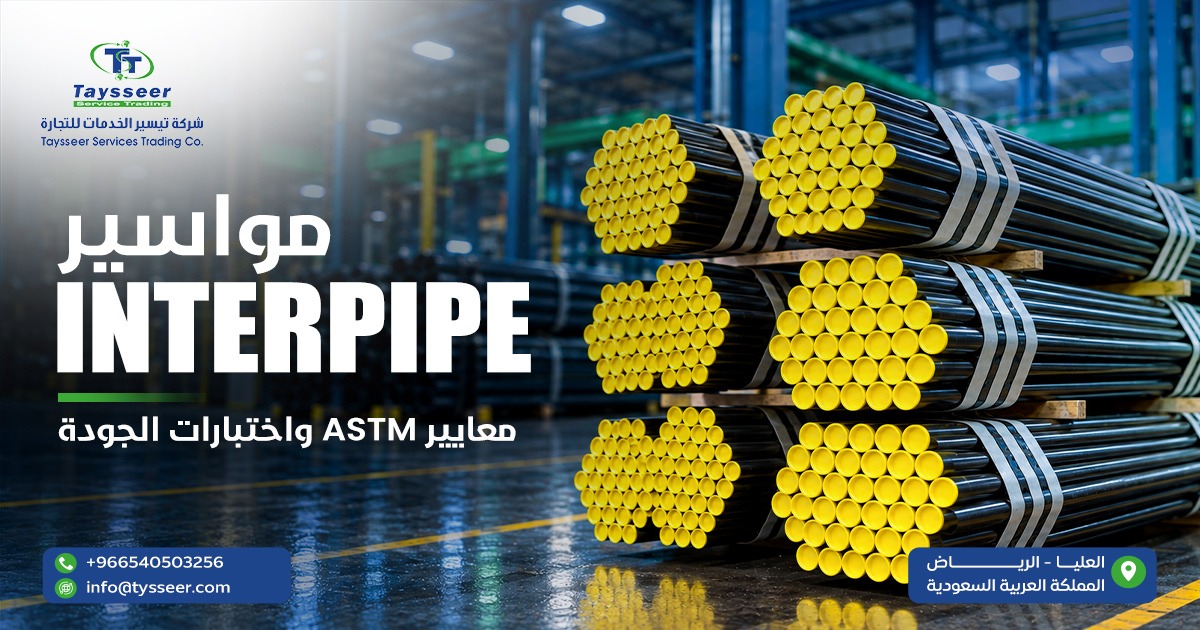
UTP Pipe specifications should be read as a complete technical requirement, not as a brand name alone. For Saudi contractors, MEP engineers, consultants, and procurement teams, the correct selection depends on pipe size, applicable standard, Grade, Schedule, finish, pipe end, and project requirements.
This guide explains how to evaluate UTPPIPE specifications, compare UTP pipe sizes, understand Schedule 40 and ASTM A53 requirements, and prepare a clear RFQ when sourcing UTP carbon steel pipe for major industrial projects across Saudi Arabia.
UTP Pipe Specifications: What Should Buyers Check?
When a project specifies UTP Pipe, the brand name is only one part of the purchasing requirement. A technically useful specification should identify the characteristics that determine whether the supplied pipe matches the BOQ, drawings, Piping Class, material specification, and approved submittal.
For procurement teams, the main items to review are:
| Specification Item | What It Defines | Why It Matters |
|---|---|---|
| Brand | UTPPIPE | Identifies the commercial product or requested brand |
| Material | Carbon Steel | Defines the basic material category |
| Standard | For example, ASTM A53 | Defines the applicable technical requirements |
| Grade | For example, Grade B when specified | Defines material requirements within the applicable standard |
| NPS | Nominal Pipe Size | Identifies the nominal pipe size |
| Schedule | For example, Schedule 40 | Identifies the wall-thickness series |
| Finish | Black or galvanized, when specified | Defines the required finish and corrosion-protection approach |
| Pipe End | Plain, beveled, threaded, or grooved as required | Must match the specified joining method |
| Quantity | Pieces, length, or total requirement | Required for an accurate quotation |
| Documentation | MTR, datasheet, certificates, or project-required records | Supports technical review and approval |
The practical rule is simple: do not order UTPPIPE by brand and nominal size alone. The complete configuration should be matched to the project requirement before quotation and again before final approval.
UTPPIPE Specifications and the Information Behind the Brand
Researchers looking for UTPPIPE specifications are usually trying to answer more than one question. They may need to know which standard applies, what sizes are available, which Schedules can be supplied, whether the pipe is black or galvanized, and what documentation can support project approval.
Tysseer’s dedicated UTPPIPE page currently identifies the product as a carbon steel pipe manufactured in the UAE/GCC and lists ASTM A53 as its published standard. The same page displays a range of sizes and technical documentation options for project enquiries. Because configuration-level information can differ from category-level portfolio information, the requested size, Schedule, finish, and documentation should still be confirmed for the actual RFQ.
This distinction is important for technical buyers. A brand page can describe a product family, while the exact item required for a project may depend on the selected size, wall thickness, pipe end, standard, and purchasing specification.
Brand Name vs Technical Specification
UTPPIPE is a commercial brand or product identity. ASTM, NPS, Grade, Schedule, dimensional requirements, and project specifications provide the technical framework used to evaluate the pipe.
A purchase request such as UTP Pipe 4 inch therefore gives the supplier only part of the information. A more useful request identifies the standard, Grade where applicable, Schedule, finish, quantity, and any required documentation.
UTP Pipe Sizes: How NPS Relates to Actual Dimensions
UTP pipe sizes should be read using the nominal pipe size system rather than treating the number printed in inches as the actual outside diameter.
NPS, or Nominal Pipe Size, is a nominal designation. The actual outside diameter is determined from the applicable dimensional standard. This becomes particularly important when the pipe must connect to fittings, valves, couplings, flanges, equipment connections, or other components with defined dimensional requirements.
For example, a BOQ may call for NPS 4. That identifies the nominal size, but the procurement team still needs to confirm the applicable dimensional requirements and the wall thickness associated with the selected Schedule.
| Term | Meaning | Procurement Relevance |
|---|---|---|
| NPS | Nominal Pipe Size | Used to identify the nominal size |
| OD | Outside Diameter | Used for dimensional compatibility |
| Wall Thickness | Pipe wall measurement | Affects internal bore, weight, and design verification |
| ID | Inside Diameter | Influenced by OD and wall thickness |
For this reason, an engineer checking a piping connection should not assume that the NPS number itself is the outside diameter.
UTP Pipe Schedule 40: What Does It Actually Mean?
UTP pipe Schedule 40 refers to a standardized wall-thickness designation used with a given nominal pipe size. It is not a complete statement of pressure rating, application, or material grade by itself.
For a selected NPS, changing the Schedule changes the wall thickness and therefore affects the internal bore and pipe weight. The correct Schedule should come from the project design, Piping Class, material specification, or approved engineering documentation.
The UTPPIPE official product literature currently includes an ASTM A53 Grade B Schedule 40 specification for black and hot-dip galvanized steel pipe. The dimensional data in that document are configuration-specific and should be used only for the applicable listed product.
Does Schedule 40 Mean Every Pipe With That Label Is the Same?
No. Schedule 40 does not make two commercially different pipes identical. The applicable standard, Grade, manufacturing type, dimensions, finish, pipe end, tolerances, inspection requirements, and documentation can still differ.
Even within the same nominal size and Schedule, procurement should therefore verify the complete specification before approving a substitution.
Schedule 40 vs STD
Schedule and traditional designations such as STD should not be treated as interchangeable across all nominal sizes without checking the applicable dimensional tables. For procurement, the safest approach is to follow the exact terminology used in the project’s approved specification.
UTP Pipe ASTM A53: How to Read the Standard
UTP pipe ASTM A53 is a useful search and procurement phrase because ASTM A53 is explicitly identified on Tysseer’s current UTPPIPE product page. ASTM A53/A53M covers welded and seamless black and hot-dipped zinc-coated steel pipe within its stated scope and includes Types and Grades defined by the standard.
This means that writing “ASTM A53” in an RFQ is more informative than simply writing “carbon steel pipe.” The buyer should still specify the size, applicable Grade, Schedule or wall thickness, finish, quantity, and any additional project requirements.
ASTM A53 Grade B and UTPPIPE
The official UTPPIPE product document available online identifies an ASTM A53 Grade B Schedule 40 configuration for black and hot-dip galvanized steel pipes. That information should be treated as product-specific rather than automatically extended to every possible UTPPIPE configuration.
For an actual project order, the safest approach is to match the required Grade and configuration against the current datasheet or technical documentation before issuing the purchase order.
UTP Pipe ASTM A53 vs ASTM A106
ASTM A53 and ASTM A106 should not be treated as interchangeable simply because both are associated with carbon steel pipe.
ASTM A53/A53M covers welded and seamless steel pipe, including black and hot-dipped galvanized pipe within its stated scope. ASTM A106/A106M covers seamless carbon steel pipe for high-temperature service.
| Standard | General Scope | What to Verify |
|---|---|---|
| ASTM A53/A53M | Welded and seamless steel pipe, including black and hot-dipped galvanized pipe within the standard’s scope | Type, Grade, NPS, Schedule, finish, and project requirements |
| ASTM A106/A106M | Seamless carbon steel pipe for high-temperature service | Grade, dimensions, temperature, design requirements, and project specification |
If an approved project specification calls for ASTM A106, the buyer should not replace it with ASTM A53 merely because the same nominal size or Schedule is available.
How to Select the Right UTP Pipe Sizes and Schedule
The correct combination of size and Schedule should come from engineering requirements, not from what happens to be easiest to purchase.
Depending on the service, the selection can be influenced by:
- Design pressure
- Design temperature
- Fluid characteristics
- Required flow rate
- Velocity limits
- Pressure drop
- Corrosion allowance
- Applicable piping code
- Line Class or Piping Class
- Connection method
- Project material specification
For this reason, UTP pipe sizes should be determined from the approved design or project specification first, then matched against the supplier’s available product configurations.
How Flow Requirements Affect UTP Carbon Steel Pipe Selection
UTP carbon steel pipe can be considered for different mechanical and industrial piping requirements, but the pipe size should still result from engineering calculations and project specifications.
In a fluid system, pipe diameter affects velocity and pressure loss. A smaller internal diameter can increase velocity and frictional losses, while a larger diameter may affect material quantities, space requirements, and overall system economics.
That makes the selection process more than a simple comparison of brands or prices:
- Identify the required service and design conditions.
- Confirm the NPS from the engineering design.
- Confirm the required wall thickness or Schedule.
- Verify the applicable standard and Grade.
- Confirm finish and connection requirements.
- Match the specification to an available product configuration.
Black or Galvanized UTP Carbon Steel Pipe?
Finish should be considered part of the technical specification rather than a cosmetic choice.
Black pipe and galvanized pipe can serve different project requirements depending on the specified corrosion-protection system, installation environment, service, and applicable project standards.
The current Tysseer carbon steel pipe portfolio lists UTPPIPE with black and galvanized finishing, while the dedicated product page identifies ASTM A53 for the published UTPPIPE configuration. The exact finish and standard should therefore be confirmed for the item requested in the RFQ.
Pipe Ends and Connection Requirements
Choosing the correct pipe does not end with size and Schedule. The pipe-end configuration should also match the installation method.
A project may use:
- Welded connections
- Threaded connections
- Grooved mechanical connections
- Flanged connections
Each connection method may create additional requirements for pipe-end preparation, fittings, couplings, dimensions, or installation procedures.
For projects using grooved systems, buyers can review Tysseer’s grooved fittings alongside the required pipe configuration. For conventional piping connections, the related pipe fittings category can be reviewed when preparing the complete material package.
What to Check in UTPPIPE Technical Documentation
Technical documentation should be reviewed against the purchase requirement, not treated as a formality after delivery.
Depending on project requirements, the documentation package may include:
- Applicable product standard
- Grade
- Nominal size
- Wall thickness or Schedule
- Dimensional information
- Heat or batch reference where applicable
- Chemical composition
- Mechanical properties
- Required testing records
- Mill Test Report where required
- Product datasheet
- Certificate of origin where required
The purpose of document review is to establish that the delivered configuration corresponds to the approved material requirement.
How to Read a UTP Pipe Specification in a BOQ
A BOQ line can often look complicated because several requirements are compressed into one sentence. Breaking the line into components makes both engineering review and procurement easier.
Consider this example:
Carbon Steel Pipe – UTPPIPE – NPS 4 – ASTM A53 – Grade B – Schedule 40 – Black Finish
| BOQ Element | Interpretation |
|---|---|
| UTPPIPE | Requested commercial brand |
| Carbon Steel Pipe | Material category |
| NPS 4 | Nominal pipe size |
| ASTM A53 | Applicable pipe specification |
| Grade B | Material Grade where specified |
| Schedule 40 | Wall-thickness series |
| Black Finish | Specified pipe finish |
This example is a way to read a BOQ entry; it is not a universal specification for every UTPPIPE project.
Common Mistakes When Buying UTP Carbon Steel Pipe
Ordering by Nominal Size Only
“4-inch UTP Pipe” does not fully define the required product. The buyer should review the standard, Grade, Schedule, finish, connection, quantity, and documentation requirements.
Confusing NPS With Outside Diameter
NPS is a nominal designation. The actual OD must be taken from the applicable dimensional standard.
Assuming Schedule 40 Defines Pressure Rating
Schedule identifies a wall-thickness series. It does not by itself establish the complete allowable pressure for a piping system.
Changing the Schedule Without Technical Review
A Schedule change can alter wall thickness, internal diameter, weight, and other dimensional characteristics. Any substitution should therefore be reviewed before approval.
Using ASTM A53 and A106 as Automatic Substitutes
The standards have different scopes and should be selected according to the project specification and service requirements.
Ignoring Pipe-End Requirements
The correct pipe size and material can still create installation problems if the pipe-end preparation does not match the specified connection system.
How to Prepare a UTP Pipe RFQ for Saudi Projects
A clear RFQ gives the supplier enough information to match the requested configuration and prepare a more useful commercial response.
| RFQ Requirement | Example |
|---|---|
| Brand | UTPPIPE |
| Material | Carbon Steel |
| Size | NPS 4 |
| Standard | ASTM A53 |
| Grade | Grade B, where required |
| Schedule | Schedule 40 |
| Finish | Black or Galvanized as specified |
| Pipe End | Plain, beveled, threaded, or grooved as required |
| Quantity | Number of pipes or total required length |
| Project Location | Saudi Arabia project delivery location |
| Documentation | Datasheet, MTR, certificates, and other project-required documents |
When a BOQ or material specification is available, attach it to the RFQ rather than relying on a short description alone.
UTP Pipe Supplier Saudi Arabia: What Should Buyers Look For?
Procurement teams searching online for UTP pipe supplier Saudi Arabia are generally looking for more than a company name. They need a supplier that can understand the technical requirement, identify the requested configuration, provide relevant documentation, and support the commercial quotation process.
For a Saudi project, useful supplier criteria include:
- Ability to handle project-specific specifications
- Clear product and dimensional information
- Relevant technical documentation
- Ability to review BOQs and RFQs
- Access to related pipe fittings and system components
- Clear communication on configuration and availability
- Support for procurement and technical submittal requirements
The objective is not simply to find a supplier with the UTPPIPE brand. The objective is to source the correct UTPPIPE configuration for the approved project requirement.
Why Use Tysseer for UTPPIPE and Related Pipe Requirements?
Tysseer maintains a dedicated UTPPIPE product page and lists UTPPIPE within its broader carbon steel pipes portfolio.
This is useful for contractors and procurement teams that need to evaluate UTPPIPE alongside related carbon steel pipe requirements. Tysseer also lists complementary product categories such as pipe fittings and grooved fittings, allowing buyers to review connected items within the same project-supply workflow.
When the project specification identifies a particular UTPPIPE size, standard, Grade, Schedule, finish, or connection requirement, provide those details to Tysseer with the BOQ or datasheet. The requested configuration can then be checked against current product information before the quotation is finalized.
How Tysseer Supports UTP Carbon Steel Pipe Procurement
For projects requiring UTP carbon steel pipe, the commercial process should begin with a technically clear requirement. A concise RFQ can include the brand, NPS, standard, Grade, Schedule, finish, quantity, delivery location, and required documentation.
Tysseer’s quotation request page can be used to submit the project requirement and supporting information:
Request a quotation from Tysseer
Where the project includes fittings or grooved connections, buyers can also review the related Tysseer product categories so the pipe and connection components are evaluated as part of the same system.
Frequently Asked Questions About UTP Pipe Specifications
What information should be included in UTPPIPE specifications?
A useful specification can include the brand, material, NPS, applicable standard, Grade, Schedule or wall thickness, finish, pipe end, quantity, and required documentation. The exact fields depend on the project.
What are the most important UTP pipe sizes to check?
The required NPS should come from the project design or BOQ. The procurement team should then verify the corresponding outside diameter, wall thickness, connection requirements, and available product configuration.
What does UTP pipe Schedule 40 mean?
Schedule 40 identifies a wall-thickness series for the specified nominal pipe size. It should be read together with the applicable standard and project requirements rather than used as a standalone pressure-rating statement.
What does UTP pipe ASTM A53 mean?
It indicates that the requested pipe is being specified against ASTM A53 requirements. The exact Type, Grade, size, Schedule, finish, and other requirements should still be verified for the requested configuration.
Can UTP Pipe be ASTM A106 instead of ASTM A53?
Only when the requested product configuration and project requirements support ASTM A106. ASTM A106 covers seamless carbon steel pipe for high-temperature service, so it should not be treated as an automatic substitute for ASTM A53.
Is UTP carbon steel pipe suitable for HVAC and MEP projects?
UTPPIPE is currently listed by Tysseer for HVAC, MEP, government, and industrial sectors. The actual suitability of a particular configuration should still be checked against the project’s approved specifications and service requirements.
Can UTP Pipe be used with grooved connections?
It can be considered where the project specifies a grooved system and the pipe dimensions and groove preparation are compatible with the selected fittings or couplings. Pipe and connection components should be verified together before installation.
What should I send to a UTP pipe supplier Saudi Arabia projects require?
Send the BOQ or RFQ showing the brand, material, NPS, standard, Grade, Schedule, finish, quantity, delivery location, connection requirements, and requested technical documentation. A complete specification reduces quotation and approval uncertainty.
Where can I request UTPPIPE pricing in Saudi Arabia?
You can submit the required sizes, quantities, standards, Schedules, finishes, and project documents through Tysseer’s quotation request page. Providing the BOQ or datasheet helps the supplier review the requested configuration before preparing the commercial response.